Our Red String
Play Our Red String
Our Red String Screenshots














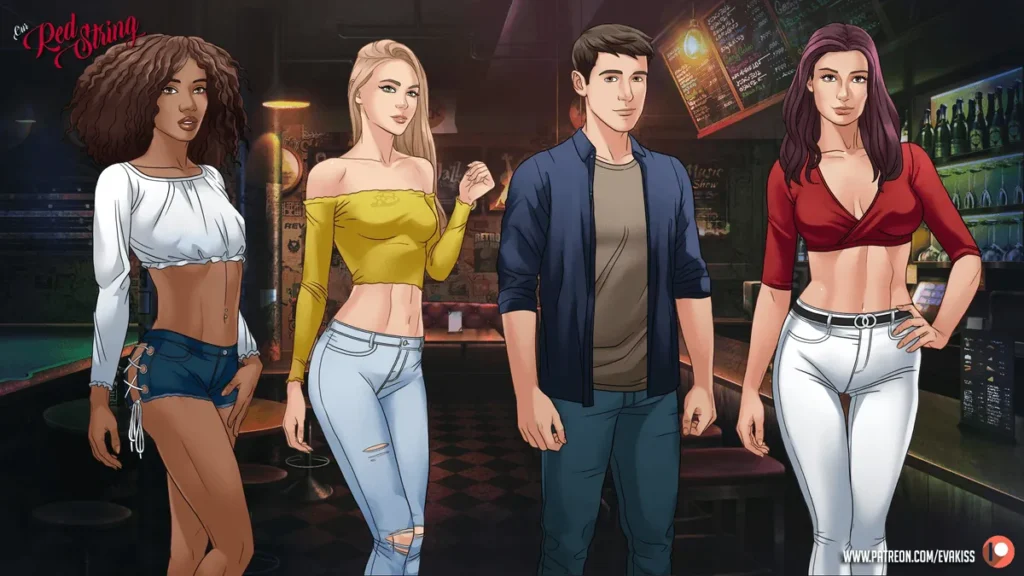



Our Red String review
Master the dual-protagonist narrative with strategic decision-making and relationship mechanics
Our Red String stands out as a sophisticated narrative-driven experience that puts player agency at the center of storytelling. This dual-protagonist game features a non-linear structure where every choice you make fundamentally shapes character relationships, unlocks unique scenes, and determines which story endings you’ll experience. Whether you’re navigating Ian’s romantic entanglements or managing Lena’s complex relationships, understanding the underlying mechanics—from stat progression to event triggers—is essential for experiencing all the game has to offer. This guide breaks down the decision-making framework that makes Our Red String’s branching narrative so compelling.
Understanding Our Red String’s Core Mechanics
Ever felt like you’re watching a drama unfold from just one seat in the theater, missing all the whispered conversations backstage and the secret motives of the other characters? 🎭 That’s what playing a traditional visual novel can be like. But what if you could jump between seats, between lives, and see how every choice ripples through an entire world? That’s the revolutionary heart of Our Red String.
This isn’t just a story you read; it’s a delicate web of lives you manage. At its core, Our Red String mechanics are built on a brilliant, interlocking system of perspectives, stats, and hidden triggers. Mastering it means understanding not just what choices to make, but when, for whom, and why the game is even offering them to you. Forget linear paths—here, you’re weaving a tapestry where every thread pulled on Ian’s side tightens or loosens a knot on Lena’s. Let’s pull back the curtain. 🔍
How the Dual-Protagonist System Works
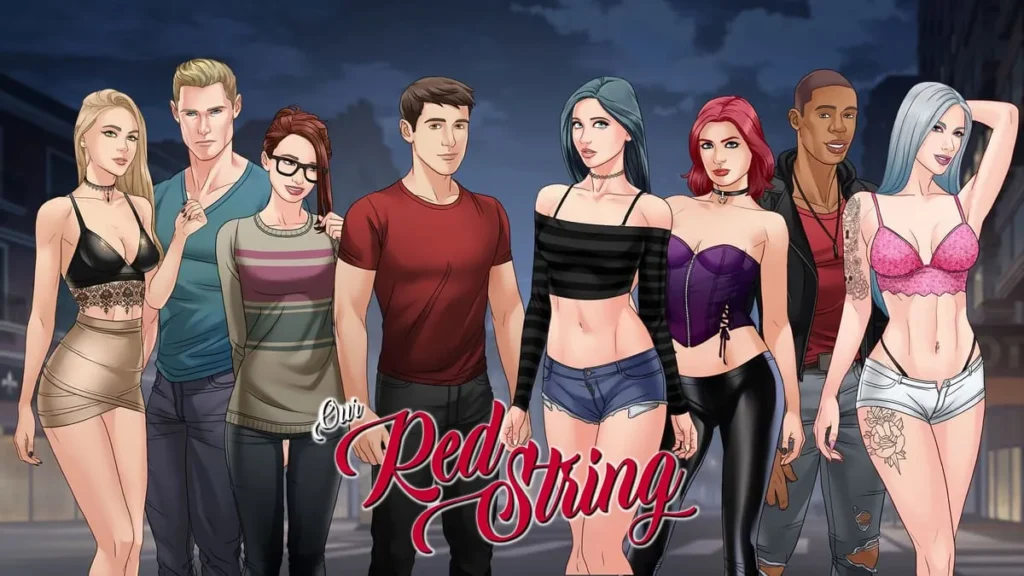
The most groundbreaking feature of Our Red String is, without question, its dual-protagonist game system. You don’t just play as Ian or Lena; you play as both, often switching perspectives chapter by chapter. This isn’t a gimmick—it’s the engine of the entire narrative.
Think of it like this: You’re the director of a play where the two lead actors never get the full script. One night, you make a choice as Ian to go out with friends. The next chapter, when you switch to Lena, you might find her alone at a café, wondering why Ian isn’t answering his texts. A choice you didn’t even make as her has directly shaped her emotional reality and her available options. This creates an incredible sense of a living, reactive world. The system forces you to think beyond a single character’s immediate desire. Is pursuing a flirtation as Ian worth the potential loneliness or misunderstanding it might create for Lena later? You’re constantly balancing two separate sets of wants, needs, and consequences.
From a practical standpoint, this structure massively expands the non-linear story branches. A scene you access as Ian in one playthrough might be completely absent in another, not because of his choices, but because of Lena’s actions in a previous chapter that changed the social landscape. It makes every playthrough uniquely personal and deeply replayable. You’re not just exploring “what if” for one person, but for two interconnected souls.
Stat Points and Relationship Progression
Now, how do you influence these two lives? It all comes down to numbers—but don’t worry, they’re the fun kind! Your primary tools are character stats and relationship points, which form the backbone of the character relationship system and your stat progression guide.
Both Ian and Lena have six core attributes that define their capabilities and personalities. You increase these not by grinding, but by making specific story choices that award you stat points. Accumulate 3 points in a stat, and it levels up, permanently unlocking new dialogue options, actions, and story paths.
Here’s a quick breakdown of what each stat governs:
| Stat | What It Represents | Influence on Gameplay |
|---|---|---|
| Wits | Intelligence, perception, and problem-solving. | Unlocks analytical dialogue, helps in academic or work situations, and allows you to see through deception. |
| Charisma | Confidence, charm, and social grace. | Opens up persuasive speech options, helps in networking, and is key for smooth romantic advances. |
| Athletics | Physical fitness, agility, and coordination. | Allows for physical actions (like dancing well or winning a fight), and can affect energy levels. |
| Creativity | Artistic talent, imagination, and expressiveness. | Crucial for Ian’s music or Lena’s writing, unlocks unique artistic responses, and imparts certain characters. |
| Lust | Physical desire, boldness in intimate situations. | Enables more forward romantic and intimate choices, affecting how relationships develop physically. |
| Empathy | Emotional understanding, kindness, and compassion. | Allows for supportive, deep conversations, helps mend conflicts, and builds stronger emotional bonds. |
Alongside these personal stats is the crucial relationship points tracking system. Think of this as the social scoreboard. Every major character you interact with has a relationship meter, but it’s not just a simple “like/dislike” bar. It’s measured in “Agenda Points,” with a total of 12 points representing the full spectrum of a connection.
🎯 Pro Tip: You can’t max out every relationship in one go. You have 12 total points to distribute across different “agendas” like Friendship, Romance, or Rivalry with a single character. Choosing to deepen a romantic connection often means points come out of the friendship pool. This makes every interaction a strategic allocation of emotional capital!
This is where the dual-protagonist game system gets really spicy. Building a relationship with someone as Ian does not automatically transfer points to Lena’s relationship with that same person. They have to earn their own connection. You might be best friends with Erica as Ian, but when you switch to Lena, she might find Erica cold and distant until she makes her own choices to win her over. This separate-but-linked character relationship system is what makes the world feel genuinely complex and independent of a single player avatar.
Event Triggers and Story Branches
If stats and relationship points are the hormones of the game’s body, then event triggers and variables are the nervous system—a hidden network of conditions that make the story twitch, jump, and come alive. This is the secret sauce behind the famed non-linear story branches.
Let’s demystify this. An event trigger is a specific, hidden condition that must be met for a special scene, conversation, or story branch to become available. It’s not just “have Charisma 2.” It’s more complex, like: “Have Charisma 2, AND have chosen to comfort Holly in Chapter 3, AND have less than 4 Romance points with Alison.” These triggers are the locks on the game’s many doors.
Status Points are different. These are incremental variables that track ongoing conditions—think “Ian’s Stress Level” or “Lena’s Financial Worry.” They tick up or down slowly based on many small choices and can act as broader gates for story events (e.g., “If Stress > 5, then…”).
Here’s a concrete example from early in the game to show how this cascade works. Let’s talk about Ian and Alison.
You get a message from Alison asking to meet. You have a choice:
1. Meet her for lunch.
2. Meet her tonight.
3. Don’t meet her (stay with Holly).
This seems simple, but beneath the surface, it’s a minefield of event triggers and variables.
- Choosing “Meet her for lunch” uses up Ian’s afternoon. This might trigger a missed event later where Lena needed help but Ian was unavailable. It likely builds Romance points with Alison but could decrease points with Holly if she finds out. It may set a status flag of “Ian_is_seeing_Alison” to true.
- Choosing “Meet her tonight” keeps your afternoon free for other triggers (maybe a potential job offer for Ian pops up during the day). The nighttime meeting itself might have a different tone, unlocking a more intimate conversation trigger that the lunch meeting didn’t have, because the event trigger requires “MEET_TIME = NIGHT” and “CHARISMA >= 3”.
- Choosing “Don’t meet her” boosts your relationship with Holly, but it might also set an event trigger that later allows Alison to walk in on Ian and Holly being close, creating a dramatic confrontation scene that wouldn’t exist otherwise. This one choice has now created three completely different narrative branches for Ian’s love life, Lena’s potential crisis, and the overall group dynamic.
This is the beauty of Our Red String mechanics. A single menu choice isn’t just selecting the next line of dialogue; it’s adjusting a vast, invisible dashboard of switches and dials that will determine what doors are open five chapters from now. The non-linear story branches aren’t random—they’re meticulously crafted consequences waiting for the right combination of keys (your choices) to unlock them.
Mastering Our Red String means learning to think like the game itself. You’re not just playing Ian or Lena; you’re stewarding their stats, carefully investing relationship points, and subconsciously hunting for those precious event triggers that lead to the most fulfilling, dramatic, or intriguing non-linear story branches. It’s a game that rewards curiosity, strategy, and empathy in equal measure. So take control of both ends of the string, and start weaving your unique story. The possibilities are as endless as they are interconnected. ✨
Our Red String’s brilliance lies in how it respects player agency while maintaining narrative coherence across its branching paths. By understanding the stat system, relationship mechanics, and event trigger framework, you unlock the full potential of this dual-protagonist experience. The game rewards experimentation and multiple playthroughs, as each decision combination reveals new scenes, character moments, and story conclusions. Whether you’re chasing specific romance endings, maximizing gallery unlocks, or simply exploring how your choices reshape the narrative, the mechanics discussed here provide the foundation for meaningful decision-making. Your next playthrough will likely reveal story elements you missed before, making Our Red String a game that continues to surprise even experienced players who thought they’d seen everything.